
Gerard ’t Hooft is one of the leading theoretical physicists of his generation. His work has fundamentally shaped our understanding of the quantum structure of the fundamental forces of nature. In 1999, he was awarded the Nobel Prize in Physics, together with his former doctoral supervisor Martinus Veltman, for elucidating the quantum structure of electroweak interactions in physics.
For more than five decades, ’t Hooft has contributed to the development of gauge theories, the renormalization of quantum field theories, and research at the interface of quantum mechanics and gravity. His work has played a central role in establishing the mathematical consistency of the Standard Model of particle physics.
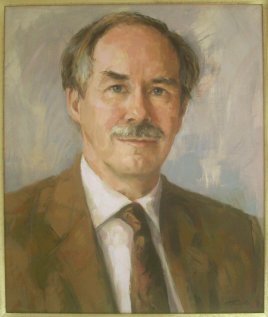
As Professor of Theoretical Physics at Utrecht University, he has supervised numerous doctoral students and influenced generations of physicists worldwide. In addition to his technical contributions, he has written extensively for broader audiences and remains actively engaged in foundational questions about the nature of physical reality.
Research
Prof. ’t Hooft’s research spans quantum field theory, electroweak interactions, quantum gravity, and the foundations of quantum mechanics. His more recent work explores deterministic approaches to quantum theory, including the cellular automaton interpretation. Read more about his research, or browse his publications and books. Students may refer to a dedicated page.
Awards & honours
Besides receiving the Nobel Prize in Physics, ‘t Hooft has received numerous other awards and honours over the course of his career, including international distinctions, academy memberships, and honorary doctorates.
For media enquiries, speaking requests, or academic correspondence, please consult the contact page.