
Gerard ’t Hooft was born on July 5, 1946, in Den Helder, the Netherlands. He grew up in The Hague as part of a family with a strong academic tradition, including his great-uncle Frits Zernike, who won the Nobel Prize in Physics in 1953.
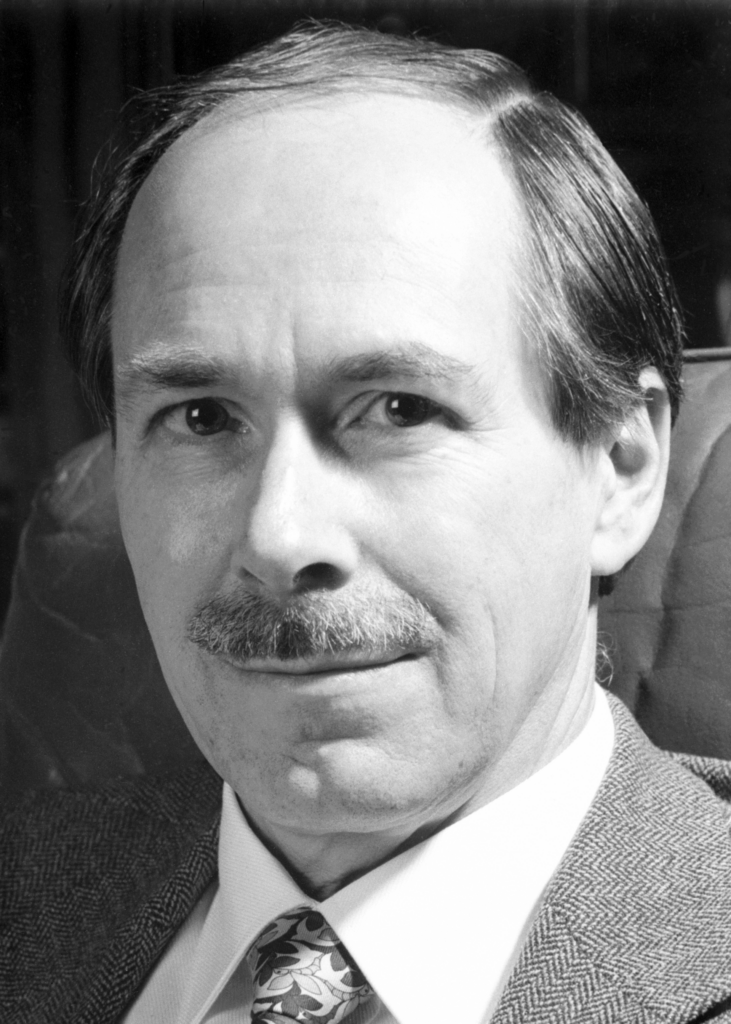
Photo from the Nobel Foundation archive.
Early years
From an early age, ’t Hooft showed exceptional talent in mathematics and physics, winning a silver medal at the Dutch Mathematics Olympiad at just sixteen years old. After completing his secondary education in 1964, ’t Hooft studied physics at Utrecht University. There, among inspiring colleagues, he quickly made a name for himself through his analytical skills and deep commitment to theoretical physics.
Academic career
In the late 1960s and early 1970s, ’t Hooft collaborated with his thesis advisor, Martinus J.G. Veltman, to develop a mathematical framework for the quantum structure of electroweak interactions. Their work introduced dimensional regularization, a technique that allowed physicists to renormalize the electroweak theory. This breakthrough was essential for advancing the Standard Model of particle physics.
’t Hooft earned his PhD cum laude in 1972 and was appointed professor at Utrecht University in 1977. In 1999, he and Veltman were awarded the Nobel Prize in Physics for their groundbreaking contributions to the field.
Beyond electroweak theory, ’t Hooft has made significant contributions to quantum gravity, black holes, and the holographic principle. He supervised many PhD candidates who went on to make significant contributions to physics themselves, including Robbert Dijkgraaf, Distinguished Professor at the University of Amsterdam and former Dutch minister of Education, Culture and Science, Herman Verlinde, Professor of Physics at Princeton University, and Max Welling, Professor of Machine Learning at the University of Amsterdam.
‘t Hooft is known for his clear and original insights and he has written extensively to engage both specialists and general audiences in his work. As an active science communicator, he frequently lectures, engages in discussions, and gives interviews on fundamental physics, inspiring generations of physicists worldwide.
Personal
Gerard ’t Hooft was married to Betteke Schik, who passed away in July 2026. He has two daughters, Saskia and Ellen, and five grandchildren. He lives in Zeist and enjoys music and art, occasionally sharing his personal reflections and artwork. Even after retirement, he remains engaged in science and public discourse, and continues to be a sought-after figure by students, journalists, and colleagues globally.